dilluns, 20 d’agost del 2012

ITINERARI de Tòquio a Hiroshima

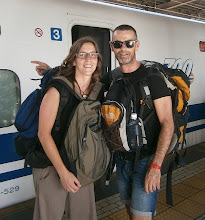
Aterratge: Tòquio. Arribem al barri d’Asakusa, un ambient prou tranquil per situar-nos entre la forta calor i el jet lack. El primer pensament era quedar-nos més dies, però aviat ens adonem que això d’anar sense reserves és un problema. Per tant, voltem pel barri, visitem Ginza i agafem un bus fins a Takayama. Aquesta petita ciutat es troba als anomenats Alps i des d’aquí explorem la zona i planifiquem la resta del nostre viatge. De seguida, ens adonem que moure’s per Japó serà senzill, la gent és sorprenentment amable. Fem una sortida a Shirakawa-go. Un poblet de cases tradicionals amb uns teulats impressionants, on per arreglar una sola casa (cada 50 o 70 anys) hi participen unes 200 persones. Un altre dia anem a Shinhotaka, des d’on veiem muntanyes amb pics al voltant dels 3000m d’alçada. És aprop d’un riu i amb aquest fantàstic paisatge de fons, que anem a banyar-nos a un onsen (unes aigües termals naturals). L’entorn el fa una experiència excepcional, i ens imaginem que a ple hivern, amb la neu al costat, aquestes aigües que voregen els 40º són encara més agradables. Tornem a Takayama, ens passegem pels carrers de cases tradicionals de fusta i portes corredisses, i ens banyem en un altre onsen, però aquest cop a la setena planta d’un bon hotel amb vistes.
Continuem la ruta. Després d’agafar un tren fins a Nagoya, fem un canvi de via i experimentem com es circula a més de 300km/h amb el Shinkansen (anomenat també tren bala), el qual ens porta amb mitja horeta a Quioto. Passem 3 nits en aquesta ciutat fent un couchsurfing a una casa d’en Shoji, compartint l’estada amb altres viatgers com l'Anjoulie i en Christoph, d’Àutria. El primer lloc que visitem és Fushimi Inari, on seguim un camí de més de 4km que s'endinsa en la muntanya, tota la ruta està plena de toris vermells i zones de pregària. L’endemà passem de la tradició a la modernitat, visitant l’estació de Quioto. Ens encanta, ens assentem a les escales per observar els jocs de miralls i l’altíssim sostre de vidres que ens cobreix, i pugem més de 10 pisos per tenir unes bones vistes de la ciutat. A la mateixa zona, trobem un hotel de “càpsules” (on dorms en petits espais tancats, situats un sobre l’altre). I també ens parem en un acollidor i silenciós local, el cafè Cha Cha, mentre esperem que a fora la temperatura vagi baixant. Marxem de la ciutat, sabent que hi pararem de nou en el nostre camí de tornada.
El bus nit ens porta a Hiroshima. La ciutat és ordenada i neta (com tot el que hem vist de Japó), i el mitjà de transport més freqüent és el tramvia, que ens porta al parc que acull el Memorial de la bomba atòmica. El parc es troba en una mena d’illa, en un extrem s’alça un edifici mig destruït que mostra l’estat en què va quedar quan van llançar la bomba; al centre, a prop d’una ofrena de flors, apareix una flama que diuen que es mantindrà encesa mentre hi hagi al món països amb armes nuclears; i al fons, un gran museu. Però el que més ens va agradar (i passava força desapercebut) és el Peace Memorial Hall for the Atomic Bomb Victims: un passadís circular amb desnivell que et portava al centre d’una sala de silenci i pregària, i que oferia informació sobre totes les víctimes identificades, les quals podien ser buscades a través d’unes pantalles digitals. En definitiva, Hiroshima et fa pensar en una trista i vergonyosa part de la història, però cal visitar-la.

Arrival: Tokyo. We stay in a quiet neighbourhood, Asakusa, trying to get used to the scorching weather and facing our jet lack. First thought was to stay longer there, but we didn’t have reservations. Next day we visited Ginza and we decided that was better to take a bus to Takayama. Once there, we explored this area near the Alps and we planned the rest of our trip. We gladly realised that people are extremely helpful. We did a short trip to Shirakawa-go, a small village, well-known for their traditional roofs (they rebuild each House every 50 or 70 years and they need to be 200 people to do it). Next day we went to Shinhotaka, from there we are able to see the Alps (mountains that reach 3000 m of altitude). In our way back we stopped to take a bath in an onsen (hot spring), next to the river. The landscape was amazing and we had a great time. However, It would be a more pleasant experience If you go there in winter, bathing in a hot water (40 degrees) and seeing snow around you. After that, we came back to Takayama, walking through the small streets with traditional wooden houses. Our last day we went to another hot spring, but that time it was on the 7th floor of an hotel with nice views. 
We cought a train to Nagoya and from there, we took the Shinkansen or bullet train, the fastest train in Japan, we arrived in Kyoto in half an hour, driving 300km/h. We spent 3 days in that city in the Shoji couchsurfing house, sharing the place with other travellers, as Anjoulie and Christoph, from Austria. The first thing we visited in kyoto was Fushimi Inari, a beautiful long path under hundreds of red “toris” and small temples reaching the top of a mountain. The second thing was really different, we went to a modern place: the Kyoto Station. We love it. We sit down on the stairs watching the windows reflecting the huge metal and crystal roof above us and then, we reached the top floor in order to have nice views from the city. Walking around the station we found two peculiar places: the Capsule Hotel (where you sleep in a kind of small closets, instead of rooms) and the Cha Cha cafè, a hospitable and quiet place where we spent some hours waiting that the scorching temperature went down. We left Kyoto, knowing we would stop there again in our way back. A night bus brought us to Hiroshima. It was a clean, tidy city, as every city we saw in Japan. The common transport was the tram and the most interesting place was the Memorial Park. The park is in an island, at one side there’s a dilapidated building, showing the effects of the Atomic bomb. In the centre, there’s a floral offering and a lighted torch that symbolize we still have nuclear weapons on the earth. At the other side of the park there’s a huge museum. But the best thing for us was the Peace Memorial Hall for the Atomic Bomb Victims. There’s a circular building that brings you into a peaceful praying room with some information about all the Atomic bomb victims. There is also another room where you can look for any of the victims using digital screens. In short, Hiroshima city reminds you a sad and ashamed moment of the history. However, you have to go there.


dimecres, 15 d’agost del 2012

Ordre disruptiu

Cinc sentits, tots ells completament actius des que hem aterrat a Japó.
El primer impacte que percep la vista és la netedat, l’ordre i l’actitud respectuosa, i amb gran facilitat entres a formar part d’aquest ordre. En un país pràcticament sense papereres et sorprèn no veure ni un sol paper pel terra, per tant, no llences ni una sola engruna, encara que l’hagis de portar hores dins la motxilla; les cues i les línies et marquen el camí, així els teus ulls s’acostumen a buscar indicacions grogues al terra del metro, tant per caminar pel costat correcte, com per fer la cua d’entrada a cada vagó des del punt adequat; i sens dubte, la primera paraula que aprens és “arigato” (gràcies), la qual no pares de repetir desenes de vegades al llarg del dia amb una lleugera inclinació del cap.
L’espai públic és responsabilitat de tothom i per això als carrers palpes aquest respecte, així doncs no es pot fumar a l’exterior a menys que hi hagi una zona de fumadors, però en canvi en llocs privats la llibertat de decisió és personal, i per tant, es fuma a quasi tots els bars, locals o restaurants.
I una altra imatge que fa que els teus ulls s’obrin àmpliament és l’escena que dibuixen els carrers plens de joves “cool” que caminen sota estridents cartells publicitaris.
Quan afines l’oïda, t’adones que les multituds de gent es mouen en relatiu silenci. Al metro les mirades són fixes a una pantalla o al vidre del davant, tots sense dir ni un mot, apunt per anar a treballar, i als cafès o restaurants sovint només sents el murmuri de la gent. No obstant, tot això es trenca quan passes davant les sales de joc, de sobte sents un soroll estrepitós que prové de desenes de lluminoses màquines alineades funcionant simultàniament.
El que rebem per l’olfacte potser és més neutre, les olors no són extremes, ni sorprenents: els mercats fan olor de menjar o de te, els temples d'encens i la seva “obsessió” pels lavabos fa que siguin increïblement nets i inodors. I del gust no podem dir més que qualsevol menjar és excel.lent i pots trobar el que desitgis en una graduació de preus de gran varietat.
El tacte és escàs, sempre hi ha una distància, que no es fa mai evident quan demanes certa informació o ajuda. L’interès per comunicar-se acaba facilitant que puguis moure’t i entendre sempre com funciona el seu país sense necessitat de parlar el mateix idioma. No reps mai una pregunta sense resposta, segur que t’acompanyen o troben la manera per treure’t de dubtes.
La percepció com a viatger ens porta doncs a descriure Japó com un país atractiu, fàcil i molt segur, on et mous amb total tranquil•litat i sense preocupació, gaudint senzillament del que t’ofereix.
Però ens han etzibat que ser Japonès és molt dur, per tant, potser no és tan fàcil viure o néixer aquí, seguint sempre les línies, disposant de només 5 dies de vacances l’any, sentint-te responsable de cada petit detall del teu país i dels estrangers que voltem perduts entre el “hiragana” (平仮名), “katakana” (片仮名) i el “kanji” (漢字), els tres sistemes d’escriptura del japonès.
Requereixen doncs, de vies d’escapament, de trencament, d´elements disruptius com el Pachinko (màquines escurabutxaques), el sake, la cervesa i el sexe esporàdic. Disrupció per mantenir els seus estàndards de vida i qualitat.


DISRUPTIVE ORDER
Since we arrived in Japan our five senses were widely active.
Using our sense of sight we realised that cleanliness, order and respect are permanently around, for that reason we took part of it from the beginning. We’ve never seen a piece of paper at the street, so we kept every small crumb in our bag although it can last hours to find a bin. We always queue and follow the yellow lines drawn on the floor at the subway stations, in order to walk on the right side at the corridors and to be in the right place when the subways stop. Besides, we keep using all the time the first word that we learned “arigato” (thank you), taking a slight bow like they do.
Everyone is responsible for taking care of the public areas and they try not to bother the others. Probably, for that reason It is not allow to smoke at the street (except in smoking areas), but owners can decide what to do in private places. In fact, you are allowed to smoke almost in every cafe or restaurant.
Last image that you won’t forget is the coolest teenagers at the streets walking among these huge coloured advertisings.
When you pay attention to your sense of hearing, you realise that there’s always a kind of silence around you. Hundreds of people are in the subway just looking at their screens or windows, without talking, ready to go to work. And also, in most of the restaurants or cafés they just whisper the words. However, it’s surprisingly different when you walk in front of an entertainment hall, where hundreds of aligned machines are working in the same time making a deafening noise.
If we talk about smells, we only can say they are quite neutral. There are not extreme or amazing smells, just common things like the smell of food and tea at the market, or the incense at some temples, and It sounds funny, but they’ve got really modern and clean toilets that are fairly odourless. And about the taste, you'll be delighted with any food, any meal is excellent and much better depending on how much do you want to spend.
Eventually, related to our sense of touching, we think there’s a kind of distance between us and Japanese people, in spite of receiving always good information and help needed. In fact, all our questions get specific answers without speaking the same language, they find out how to resolve your doubts.
As travelers, we would describe Japan as an attractive, easy and save country, where you can get around without worries, just enjoying the pleasure of being here.
Nevertheless, someone told us that being a Japanese person is very hard. So, it might not be easy to follow always the lines, to work hard having only 5 holy days and to feel responsible for any small detail of your country and for all foreigners lost among the “hiragana” (平仮名), “katakana” (片仮名) and “kanji” (漢字), the three Japanese writing systems.
So, they require some amounts of disruptive elements as Pachinko, sake, beer, and sporadic sex. Disruption in order to keep on living with their high standards of quality and way of life.


FOTO/PICTURE: Capsule Hotel "9 hours".

dijous, 2 d’agost del 2012

No language barriers


No existeixen barreres linguístiques quan la gent mostra interès per comunicar-se. Gratament sorpresos amb el país, però sobretot encantats amb la gent.

There are no language barriers when people are interested in communicating. Happily surprised about this country, but especially about Japanese people.

dilluns, 3 d’octubre del 2011

ITINERARI México

Travessem la frontera a peu per un dels ponts que creua Río Grande. Mentre caminem amb fluïdesa per entrar a Mèxic, en sentit contrari hi ha una gran cua de gent i cotxes que esperen ser revisats per entrar a EEUU. Nosaltres no trobem ni policia, a la nostra frontera d'entrada només hi ha militars. La família de la Yazmín ens venen a esperar i ens conviden a dinar a casa seva, a Nuevo Laredo. El matí “està inquieto” com diuen ells, un helicòpter dóna l'alarma que alguna cosa està, algun tiroteig per la ciutat. Esperem unes hores fins que tot està més tranquil i ens porten a l'estació on agafem el bus fins a Monterrey, un dels grans motors econòmics del país, una ciutat immensa. Anem directe al centre i la nostra sorpresa és la poca activitat que s'hi mou. El barri antic està format per carrers estrets, cases baixa blanquinoses i carrers adoquinats, un lloc prou agradable si no fos que la situació del país n'ha fet marxat la gent, traspassar locals i ha fet desaparèixer els turistes. La darrera nit, des de l'hostal sentim les "balaceras" que van corroborant la inseguretat de la zona i la forta problemàtica que suposa pels seus habitants. Agafem el bus i travessem una llarga i àrida carretera en línia recta fins a Zacatecas.En aquesta ciutat passem uns dies, estem en un hostal amb una bona terrassa i ha coincidit que es celebra un festival de músiques folklòriques. Així doncs, comencem a trobar els primers turistes (mexicans i estrangers) i gaudim de la ciutat, un lloc amb moviment, jovent i molta activitat cultural. A més, entrem força endins a la mina del Edén i coneixem millor com treballaven els miners de la zona. Al cap d'uns dies anem a León, on ens trobem amb el nostre amic Cristóbal, passem un dia a casa seva, "platicamos" unes hores i aprenem molt de la història i els orígens dels mexicans. El següent dia anem a Guanajuato, un dels llocs més interessants, una ciutat viva i molt particular, plena de color, de desnivells, carrers estrets, molts universitaris, molta cultura i també festa, "mezcal" i tequil.la. Tots tres compartim un parell de dies ben divertits. I des d'allà fem un breu desplaçament fins a Morelia, tranquil.la ciutat colonial amb una gran catedral al mig i una plaça rodejada d'arcades que acullen cafeteries i restaurants.En aquest moment decidim dirigir-nos al sud del país, i ens preparem pel canvi de paisatge i d'ambient, per entrar a zones més verdes, de mar però també de selva, entrar a zones rurals, descobrir Chiapas, les ruïnes Mayes, les arrels i costums més indígenes i retornar al centre per conèixer Ciudad de Mexico. No obstant, el nostre destí serà un altre. Arribem a Oaxaca, ciutat de cases baixes i carrers empedrats que ens porten al conegut zócalo, als mercats, cafeteries, a les esglésies i places, però no podem gaudir-ne massa, el segon dia ja ens trobem a l´hospital, on passarem gairebé una setmana. El vol de tornada ens veiem obligats a avançar-lo i abans del previst ja som a casa. El més important, és que ara estem a casa i estem bé.


We reached the border crossing a brigde above Río Grande, Yazmin’s family was waiting for us at the other side. While we walked fluently to Mexico, there were a lot of people waiting to the USA border. Arriving in Nuevo Laredo, we saw an helicopter and we realised soon that something was wrong in the city, after a few phone calls we knew about a shooting in the street. We waited some hours and we left to Monterrey, known as one of the economic engines of the country. We arrived to the ancient part, but surprisingly, there was no one at the street and a lot of places were for rent. We saw what used to be a nice neighbourhood that nowadays was an empty place because of the insecure situation. The last day in our hostel we listened astonished the sound of several fire shoots. We took the bus crossing a long, dry area and finally, we arrived in Zacatecas. Once there, we found a nice hostel with an excellent rooftop terrace and we enjoy the Folklore Festival that was taking place in the city. We met the first tourist and we walked around among young people, music and different cultural activities. Besides, we visited a deep mine called La Mina del Edén.After a few days we reach León, where we met our friend Cristóbal, we spent one day at his home, talking and learning a lot of things about the Mexican history. Next day we went to Guanajuato, one of the most vibrant and interesting cities, full of colours, narrow streets, university students, culture and also nightlife, “mezcales” and “tequilas”. The three of us had a great time over there. After that, we went to Morelia, a colonial city with a huge cathedral and a big square full of cafes. On that time we were ready to travel to the south, expecting to find a “different” Mexico, some beaches, the jungle, rural villages, ancient ruins and indigenous traditions, adding our visit to Ciudad de Mexico before going home. Nevertheless, we had another fate. We arrived in Oaxaca, a pleasant city with markets, cafes, churches, squares and a quite atmosphere that we couldn’t enjoy as much as we would. The second day we had to go to hospital, where we spent almost a week. At the end, we moved forward our flight back home without having time to visit anything else. The most important thing it’s that now we’re at home and we’re fine.


diumenge, 7 d’agost del 2011

ITINERARI Oklahoma i Texas

Oklahoma no és un estat realment sorprenent, tot i que hi estem bé. Primera parada: Claremore, lloc de naixement de Will Rogers, cowboy, actor, viatger i filòsof de principis del S.XX. Fem una breu visita a Thalequah per veure una reproducció bastant acurada d'un poblat Cherokee i reconèixer la forta petjada que els indis han deixat per tota aquesta zona. Recuperem la Ruta 66 i ens parem a dinar a Stroud, en un local que resulta ser un dels lloc d'inspiració de les històries del "Llamp Mc Queen". Finalment, arribem a Oklahoma City, on hem quedat amb la Marta, en Jens, la Kenya i en Nil, ens fa molta il.lusió trobar-los a tantes milles de casa.
Després d'un parell de dies, deixem la ciutat i anem al parc natural de Wichita Mountains, encara no fa uns minuts que hem entrat que un búfal camina pausadament per la carretera, passant just pel costat del nostre cotxe aturat. Cal dir que ens fa extrema il.lusió, però estem uns segons a l'expectativa de veure com reaccionarà, la veritat, no ens fa ni cas. Travessem el parc a través de les diferents carreteres que ressegueixen una vegetació seca i rocosa, i tenim també opció de veure unes divertides i curioses marmotes, i altres búfals però a més distància. Quan deixem enrere el parc és per entrar a Texas.
El nord de Texas ens encanta. Esquivem les immenses ciutats de Dallas i Forth Worth, amb gran moviment econòmic i molt poblades, i escollim carreteres secundàries entre poblets de ranxos i cavalls. El paisatge ha agafat un color groguenc ja que els grans camps d'herba estan cremats per la calor, pels voltants, unes tanques blanques que defineixen les limitacions de cada propietat, unes grans explanades amb poc més de quatre arbres on s'ajunten totes les vaques sota l'ombra, i unes grans mansions que s'entreveuen al fons.
El nostre contacte real amb els habitants de la zona comença a Pilot Point, entrem a l'únic restaurant en una petita plaça deserta, és el local d'en Jay i la seva família, un museu de local que acumula fotos, objectes i tot tipus de curiositats antigues que s'amunteguen per tot arreu amb un desordre ben organitzat. Molt aprop trobem el local d'en Bob, el Löwbröws, l'únic bar de la zona, on fem unes birres entre els pocs clients que ens pregunten encuriosits com hem arribat a la zona.
Visitem algun ranxo pels voltants i contactem amb la Mònica, una catalana que fa temps s'ha establert a Texas i a qui fem una breu visita. Ens parem també al llac a fer un toc i continuem cap al sud. Seguint els consells d'en Jay, no escollim l'autopista, sinó les petites carretes direcció sempre sud fins a Fredericksburg. Un poble on tornem a l'hostal familiar d’en Jorge i la Debbie que ja havíem conegut fa un parell d'anys i per segona vegada anem al restaurant on hem menjat el millor filet de carn, i la veritat sigui dita, aquesta cop tampoc ens decepciona.
L'endemà anem a Austin, la ciutat ja la coneixem però tenim un record especial d'una piscina natural que amb aquesta calor creiem que pot ser de bon visitar, passem el matí a Barton Spring, anem a dinar a un gran mercat amb tot tipus de menjars i cuines a dins, i després de dormim a les afores de San Antonio. L’endemà a primera hora coneixem la Yazmin que ve de visitar la seva familia a Nuevo Laredo.
En aquest punt del viatge deixem el cotxe. Voltem per la ciutat visitant el "Riverwalk" envoltat de restaurants, bars i terrasses , i entrem al que queda de El Alamo, on un grup de texans varen defensar la seva terra contra el general Santa Anna, fins a la mort. Des d'aquí, agafem un bus fins a Laredo, ens carreguem motxilles a l'esquena i ens preparem per travessar frontera.


We weren’t extremely surprised about Oklahoma, but it was OK. Our first stop: Claremore, birthplace of Will Rogers, a famous cowboy, actor, traveler and also philosopher at the beginning of the 20th century. We visited Thalequah and his Cherokke small Indian village in order to know better their culture and their way of life in the past. After a while, we came back to Route 66 driving through Stroud, one of the inspiration places for the film Cars and the Lightening Mc Queen. Finally, we arrived in Oklahoma city, where we met Marta, Jens, Kenya and Nil. It was really nice to meet them so far from our homeland .
After a couple of days, we hit the road again and we arrived at Michita Mountains where we came across a huge buffalo walking in the middle of the road. We stopped the car and we felt not just excited, but also slightly scared. After a few seconds the buffalo was following his path without paying any attention to us. We drove through different roads in the middle of a dry and rocky landscape, stopping to watch some funny prairie dogs and other groups of buffalos not as near as the first we had found. A few miles from there we headed to Texas.
We had a great time in north Texas. We tried to avoid big cities as Fort Worth and Dallas, and we focused on small towns and their landscape, full of ranches and horses that shape this beautiful area.
Pilot Point is the town where we got in touch with remarkable people. Eating at Jay´s cafe and having some beers in Löwbröws, with his owner Bob and some of the costumers, they let us spend a couple of great afternoons.
Visiting some ranches in the area, we met Monica, a Catalan woman who´s running a ranch and lives there. Jay and the guys from de bar show us the best scenic roads to reach Fredericksburg. A town that we were a couple of years ago and we stayed in the same place enjoying the company of the owners of Fredericks Motel, George and Debbie. Moreover, we went in the same amazing restaurant where we had eaten the best rib eye steak and we did it again.
After a couple of days, we drove to Austin, looking for the natural pool at Barton Springs which was located a few miles outside the capital. That day we slept on the outskirts of San Antonio and early in the morning we met and had a nice talk with Yazmin, who had been visiting his family in Nuevo Laredo.
Finally, we head to the center of San Antonio where we spend two days going around the river walk and visiting the famous Alamo. We left our rental car and we reached Laredo by bus, ready to cross the border.


dilluns, 1 d’agost del 2011

ITINERARI Illinois i Missouri

O'Hare Airport, Chicago. Adaptació ràpida als canvis d'horari, temperatura, llengua i habituals símptomes d'incorporació a un nou medi. La vista aèria ja ens permet fer-nos una clara idea de la ciutat, un centre d'alts gratacels dibuixant la costa del llac Michigan, més enllà un munt de barris i zones residencials que la converteixen en una ciutat molt extensa en territori. La primera nit la passem a un hostal aprop de Lincoln Park, l'endemà a través del Couchsurfing contactem amb en Jordan que ens acull 3 dies a casa seva i ens porta a navegar amb el seu veler per l'immens llac, des de l'aigua tenim un bon perfil de la ciutat. Visitem el Loop, centre de la ciutat que queda definit per les vies circulars d'un centenari tren alçat. Passegem entre carrers amb la vista més aviat cap al cel, caminem per l'agradable Milenium Park i resseguim el passeig del llac fins L'Aquarium i el Planetarium fins poder fer-nos una petita remullada.
Sortim de la ciutat orgullosos de conduir un cotxe americà sense marxes i amb AC. D'entrada baixem per la famosa Ruta 66, després d'unes milles ens desviem cap a Arthur, on passarem 2 dies per conèixer i retrobar-nos amb els Amish. La zona és tranquil.la, ens envolten grans camps i plantacions, immenses cases que acullen famílies sempre nombroses, i ens assentem per veure com el dia a dia dels Amish els porta a treballar tot i els més de 100 graus F (uns 40 C). És també en aquesta zona on coneixem la Carol, en Bill i la Devora que treballen al motel on estem, amb ells passem un agradable vespre de xerrades.
Recuperem la Ruta 66 aprop de Litchfield, fem parada a l'antic Ariston Cafe de mitjans del S.XX i entrem a l'estat de Missouri, la carretera que escollim és el Kate Trail, petita comarcal coneguda per rutes de ciclistes que ens porta entre muntanyes, verda vegetació i petits poblats força aïllats, la parada la farem a Portland, en un lloc aparentment tancat, però que descobrim a dins ple de vida i d'història, la mestressa i les treballadores ho acaben convertint en una parada molt encertada per fer una cerveseta. Seguim tirant milles en direcció a la zona de Ozark Lake, un immens llac ple d'activitats aquàtiques i de lleure, ple d'apartaments, malls, cartells, hotels i anuncis que s'amunteguen lluitant contra el paisatge. Dormim, i el dia següent baixem direcció Spriengfield per entrar a un nou estat.


O'Hare Airport, Chicago. We adjusted quickly to new timetables, weather and languages. From the sky we realized what kind of city Chicago would be, a well-defined skyline following the Michigan Lake and a big amount of neighborhoods extending the city. We spent our first night in a hostel near Lincoln Park. Next day we got in touch with Jordan, member of Couchsurfing and we spent 3 days with him, one of them sailing into the big lake, from the boat Chicago’s view was just great. We visited the Loop with the centenary train rails above the streets and we walked around the city, heading Millennium Park and walking through the sidewalk around the lake, swimming in one of his small beaches.
After a few days we showed of our rental American car with AC. We started with Route 66, after some miles we reached Arthur where we stayed 2 days surrounded by the Amish community who were still working in spite of the 100 degrees. Once there we met Carol, Bill and Devore workers of our motel, we had a nice chat with them.
Getting back to Route 66 we arrived in Litchfield, we stopped in the old Ariston Café (1945). After that we drove through to Missouri heading the Katy Trail (small green road, well-known by cyclists). Portland was our next stop and it was really worthy because of the girls that we met in a apparently closed café, but really full of live. Mile after mile we crossed the Ozark Lake area, where we could see and intensively aquatic activity and thousands of apartments, malls, hotels and adds hiding the glamorous landscape. After sleeping near Springfield we kept forward on the road to visit another State.


dissabte, 23 de juliol del 2011

Hitting the road


Juliol del 2011.
Inici: Chicago